When Malawians hear “Blantyre”, what quickly comes to mind is Malawi’s commercial capital. However, the long wait for a public health centre in rural communities along the northern margins of the city, which was founded by Scottish missionaries in 1876, exposes gaps in service delivery that a performance-based grants seek to address, our corresopondent TEMWA MHONE reports:
Lunzu Trading Centre is roughly 20 kilometers from Blantyre City, but far from rural communities that depend on its sole public health centre in life-and-death conditions.
This sums up the plight of Malawians in Senior Chief Kapeni’s territory, who have never had a public health facility since time immemorial.
For years, 65 villages on the outskirts of Malawi’s commercial city have endured long trips to Lirangwe Health Centre in Traditional Authority Lundu or Mlambe Mission Hospital at Lunzu, where they had to pay for life-saving services.
Senior Chief Kapeni said his subjects have been struggling to access health care.
“We lived between a rock and a hard place due to long travels to these facilities, plus out-of-pocket fees at Mlambe. Those who cannot afford the hospital trips often seek medical assistance when the illness gets out of hand. Some died of treatable diseases,” says the traditional leader.
In 2011, the deadly delays to access healthcare compelled the Blantyre District Health Office to rent a house at Lunzu Trading Centre to provide free healthcare for the out-of-town community.
“It was heartbreaking to witness a woman losing her child outside my court because of the long distance,” recalls Kapeni. “I was moved to engage healthcare authorities at Capital Hill and Blantyre District Council until they repurposed the house at Lunzu to reduce preventable deaths.”
Group village head Mtema says the 15-year-old clinic brought short-lived relief, as it remains far from villages where a majority of the target population lives.
He states: “The good thing is that it was free unlike Mlambe, but we had to walk long distances to get treatment, care and support. So, it was still costly for us.
“We needed a health facility in our rural settings. After all, Lunzu Health Centre was always overwhelmed by market users and surrounding communities, not the far-flung villagers.”
Besides, people from well-served areas took advantage of market days to get free medicine from the facility, worsening frustrating stock-outs of medicines and essential supplies.
On-off intervention
In 2014, Blantyre District Council started constructing Kadidi Health Centre in Mtema Village, a central locality, for easy access to health care services.
Kapeni recalls: “Construction was abandoned due to Cashgate [the massive plunder of public resources at Capital Hill]. We pushed hard in 2019, but there were no funds available at the council.”
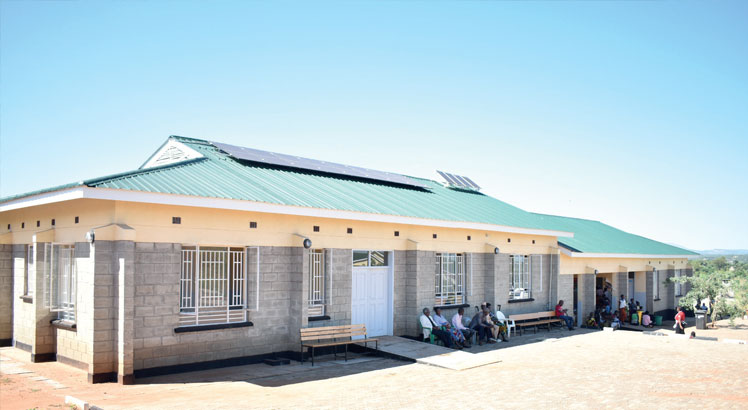
However, the underserved area on the northern margins of the bustling city now boasts a state-of-the-art K765 million health centre and two staff houses in operation.
It helps scores of outpatients alongside provision of preventive, maternal, child health services in the community of over 40 000.
The health facility was completed with funding from the World Bank under the Governance to Enable Service Delivery (Gesd) performance-based grants through the National Local Government Finance Committee.
Gesd revived construction of Kadidi Health Centre in 2023 after 11 years of stalling.
The performance-based grants support district councils to invest in projects that meet citizens’ needs and utilise resources for improved service delivery, including for communities in hard-to-reach areas.
Blantyre district commissioner Alex Mdooko says Gesd has improved service provision in the district often sidestepped by rural development financiers because it bears the same name as the city in its interiors.
“This is a game-changer because we are constructing full-package projects in various sectors, including healthcare, water supply, sanitation, education, agriculture and roads. With facilities such as Kadidi Health Centre, people’s lives have been secured,” he said.
The Finance Committe’s Gesd project coordinator Charles Chunga, commends the council for demonstrating efficiency, equity and accountability in the execution of initiatives under the grant.
“We are happy with the quality of the infrastructure, which shows value for money invested and resilience. Quality of life for citizens in the area has been improved as the council financed a prioritised health care project,” he says.
The new health facility excites Senior Chief Kapeni.
“This was long overdue,” he says. “I am pleased that my people have access to healthcare anytime without worrying about long distances and money.”
Care day and night
Community member Margret Matewere envisions the clinic averting death from preventable and treatable illnesses by providing health talks in surrounding villages, timely treatment and quick referrals.
“Some of my relatives have died due to long walks to Lunzu Health Centre, so I feel relieved because two health workers stay within the premises. This assures us that we can get treatment any time,” she said.
Kadidi Health Centre in-charge Gloria Chauluka promises to serve the community diligently and ensure right to health for all regardless of where they live.
Village heads in the area have formed security bylaws to prevent vandalism and theft at the long-awaited health facility.